
After Hail or High Winds: An Illinois Roof Checklist
After hail or high winds pass through Worth, Palos Heights, Mokena or nearby communities, it is natural to wonder whether the roof needs attention.
Start with a safe record of what you can see, then use an inspection to understand the condition of the roof itself.
Wait until the weather threat has ended
The National Weather Service recommends checking property for damage after the severe weather threat is over. Stay away from downed wires, damaged trees and unstable structures. Keep people out of an area with a sagging ceiling or other signs of possible collapse. Roof access and temporary covering belong with trained professionals using suitable equipment.
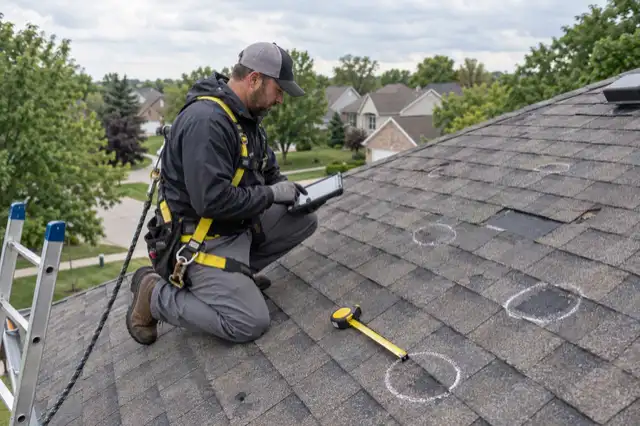
Make a useful ground-level record
Photograph visible changes from safe locations. Look for displaced shingles, debris, damaged gutters and new interior water marks. Save the date, the approximate time you first noticed the problem and any older photographs that show the same area before the event.
Dents in metal and debris on the ground are reasons to investigate. They do not, by themselves, prove that shingles need replacement. Weather reports show that an event occurred in an area; the condition of an individual roof still needs to be assessed.
Describe the leak accurately
If water has entered, note which room is affected, when the water appeared and whether it changes with wind direction or continued rain. Photograph the stain and any visible progression. Move belongings only when it is safe to do so, and keep clear of wet electrical fixtures. Do not enter a damaged attic or climb onto the roof to trace the source.
Ask for findings you can understand
A useful inspection distinguishes storm-related concerns from normal wear, installation problems and older repairs. Request photographs, the location of each finding and an explanation of whether the proposed work is temporary protection, a localized repair or a larger roof project.
Ask what remains uncertain. Some conditions cannot be confirmed without closer access or opening an affected assembly. An honest report explains those limits rather than presenting every mark as damage from the latest storm.
Separate the roof scope from coverage decisions
A contractor can document roof conditions and explain construction options. Insurance coverage and claim decisions depend on the policy and the insurer's review. Keep your photographs, estimates and receipts organized, and direct policy questions to your insurer. No inspection can promise that a claim will be approved.
Arrange the next step for your address
Read about hail damage roof repair and storm restoration, or explore service information for Palos Heights and Mokena. Request an assessment or call (708) 362-7500 to confirm availability.
Safety reference: National Weather Service: What to Do After Severe Weather.
